
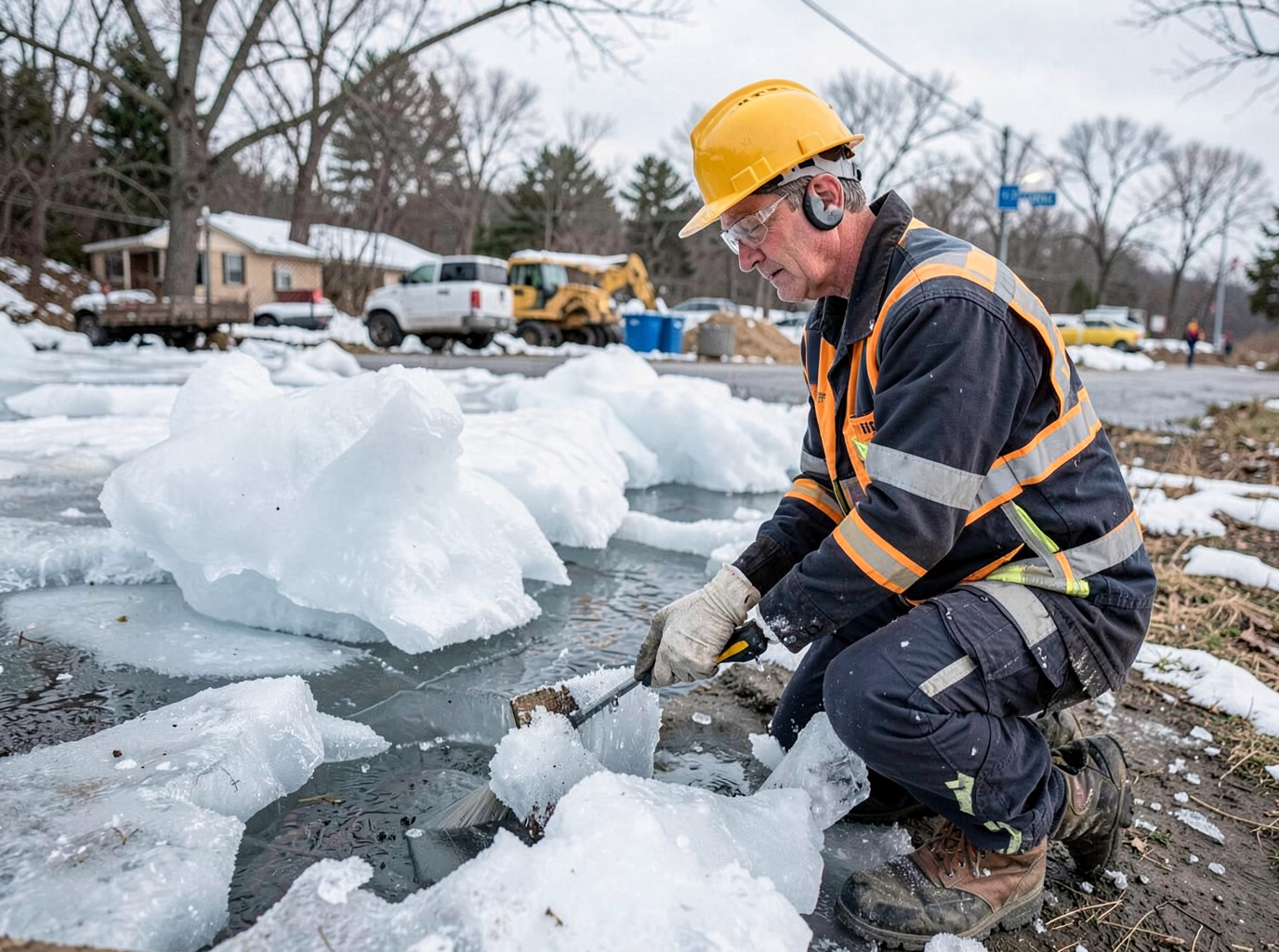
Dubuque's humid continental climate brings repeated freeze-thaw cycles that drive water under shingles on older homes common in the North End and South End. Ice dams form when attic heat melts snow on the upper roof while eaves stay below freezing, backing water into attics and walls. Homes built before widespread insulation upgrades, especially two-story Victorians near the Fenelon Place Elevator, see the worst buildup because narrow eaves and steep pitches trap heat differently than newer ranch styles.
Removal starts with identifying heat loss points rather than just chipping ice. We use steam wands on low-pressure settings to avoid shingle damage and check for blocked soffit vents caused by debris near Eagle Point Park properties where tree cover is heavy. Prevention often requires adding baffles and ridge vents to maintain consistent roof deck temperatures, particularly on homes in the Historic Millwork District where original slate or asphalt layers complicate airflow paths.
Cedar Rapids contractors sometimes recommend full roof replacement after one bad winter, but Dubuque jobs frequently succeed with targeted fixes because many structures still have sound decking under multiple layers. We inspect for ice dam recurrence risks around chimneys and valleys where warm air from bathrooms and kitchens escapes, then seal bypasses before installing heat cable only on the lower four feet of roof. This approach respects the county's freeze depth and avoids unnecessary material removal on sound older roofs.
Technician insight
In Dubuque, the thing that catches most people out with Ice Dam Removal and Prevention is how quickly warm air from uninsulated knee walls in 1920s North End homes pushes the roof deck above freezing while the eaves stay frozen solid.
North End Two-Story Ice Dam
Heavy snow followed by a January thaw left water staining ceilings in a 1928 home near the National Mississippi River Museum. We found blocked soffits and missing baffles over the kitchen. After steam removal and adding ridge vents plus targeted insulation, no new dams formed during the remaining winter.
Ice Dam Removal and Prevention Services We Offer
✓Ice Dam Steam Removal
Low-pressure steam application melts dams without shingle tearing on steep pitches common in Downtown Dubuque.
✓Heat Cable Installation
Self-regulating cables placed along eaves and valleys prevent refreezing on North End and South End homes.
✓Attic Heat Loss Sealing
Locates and blocks bypasses around chimneys and recessed lights that create warm roof spots in winter.
✓Soffit and Ridge Ventilation Assessment
Evaluates airflow in older Dubuque homes to reduce attic temperature differentials that feed ice dams.
✓Gutter and Downspout Winter Prep
Cleans and installs guards to keep meltwater flowing before it refreezes at the roof edge.
Ice Dam Removal and Prevention Cost in Dubuque, IA
| Service | Typical Range | What Affects It |
|---|---|---|
| Ice Dam Removal Visit | $250–$650 | Varies by roof height, dam length, and access in areas like the Historic Millwork District. |
| Heat Cable Installation | $400–$900 | Depends on linear feet and whether electrical tie-in is needed. |
| Attic Sealing and Baffle Work | $300–$750 | Higher on multi-story homes with limited attic access. |
Ranges are typical for Dubuque, IA and confirmed with an exact written quote before any work starts.
How it works
- 1
Site Inspection
Walk the roof and attic to map heat loss and existing dam locations on the specific Dubuque property.
- 2
Safe Removal
Apply steam or mechanical methods from ladders or lifts while protecting shingles and gutters.
- 3
Leak Check and Documentation
Inspect interior ceilings and walls for moisture intrusion and photograph conditions for the homeowner.
- 4
Prevention Recommendations
Provide prioritized list of insulation, ventilation, or cable options based on the home's age and roof type.
Pricing
Most Dubuque jobs fall between a few hundred dollars for removal and low thousands when prevention upgrades are added.